treatment record
glitch-envelope-02
Time-varying glitch with an AUTHORED cut list. Long stretches carry the CV overlay — contours, skeletons, id boxes — over an essentially clean image at a 0.04 displacement floor, and bursts rise and decay over about 1.5s (cut-half-life 26).
- status
- preferred
- upstream
- pass-02 frames 1–3,600
- evidence
- Video only. No frame sequence was written, so the encode is the record.
Its window on pass 2's full 43,200-frame axis.
what it looks like · 12 frames
 f0000010:00
 f0003130:13
 f0006490:27
 f0009610:40
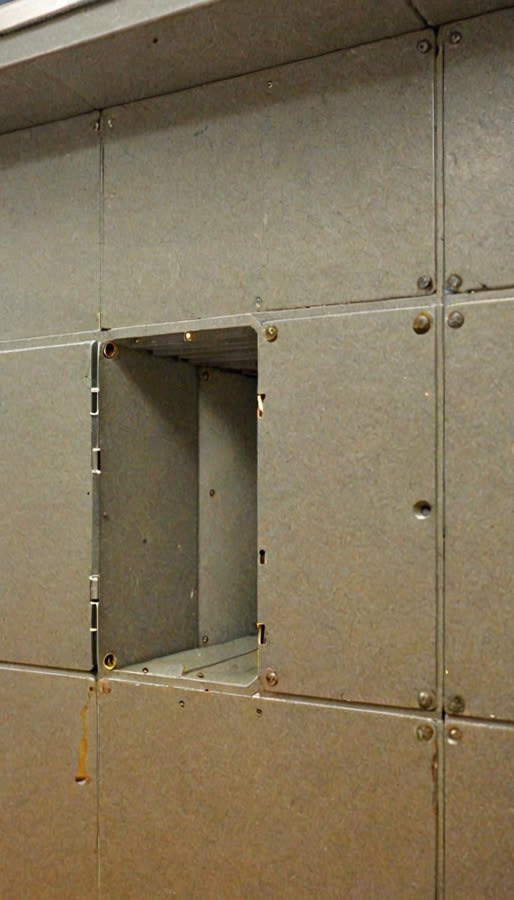 f0012970:54
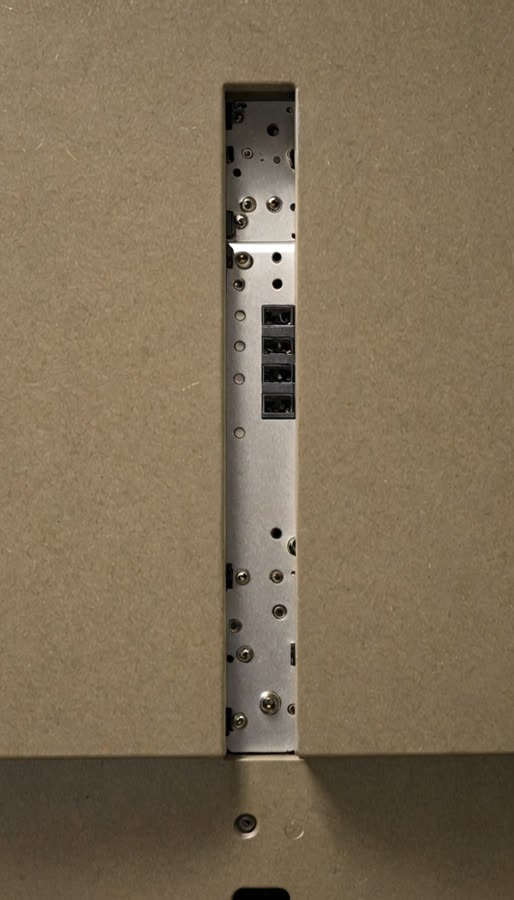 f0016091:07
 f0019451:21
 f0022571:34
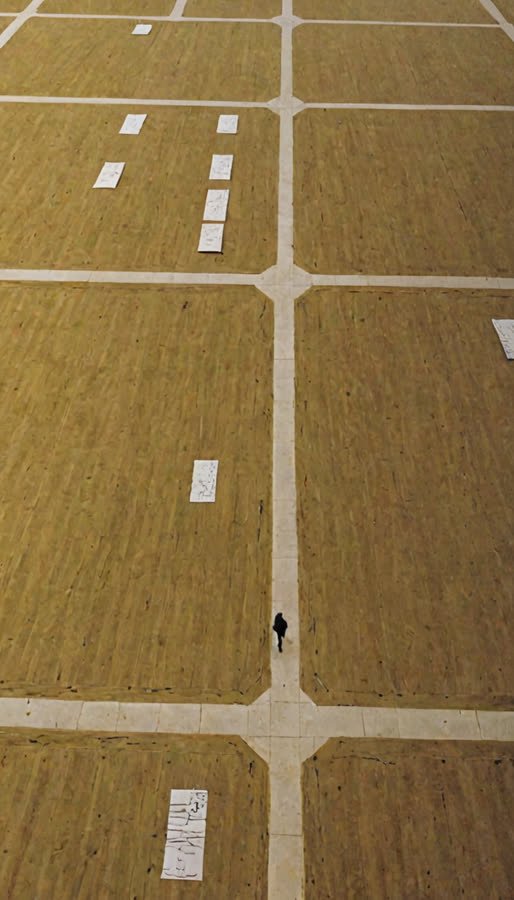 f0025931:48
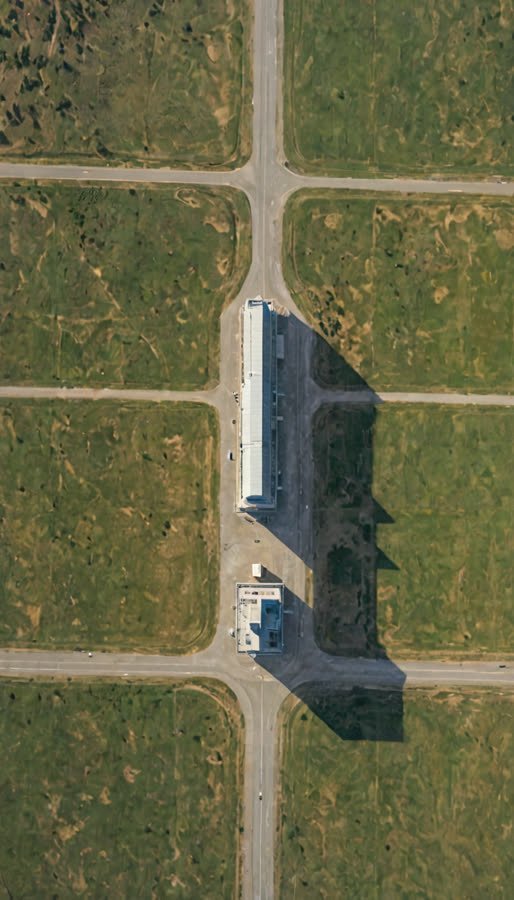 f0029052:01
 f0032412:15
 f0035772:29
This treatment kept no sampled frames of its own, so these are the source frames it consumed — pass-02 1–3,600, before the treatment was applied.
glitch-envelope-01 detected its cuts automatically, which followed the render's OWN churn: at peak saturation the source sits at denoise 0.77 with a high frame diff, so it fired 52 cuts after frame 2,400 with a median shot of 8 frames and 76 of 97 shots under a second. The envelope never decayed and the densest passage was torn apart entirely — the one place the image most needs to be legible. Here the 14 cuts are placed: the eight chain breaks stay, because they are real discontinuities in the material, and through peak saturation the spacing is WIDER not narrower, ~220 frames (9.2s). The longest calm in the piece, 470 frames / 19.6s, sits at 1,969-2,439 as saturation arrives, so the dense frame gets an uninterrupted look before chaos punctuates it.
Upstream
- pass
- pass-02
- frames
- 1–3,600
- source
regenerable: hstack of passes/pass-07-rehearsal/{frames,text} 1-3600 (image left, text right)- source sha256
be311e6eb26b
Regenerating the source
ffmpeg -framerate 24 -start_number 1 -i frames/frame_%06d.png -framerate 24 -start_number 1 -i text/frame_%06d.png -frames:v 3600 -filter_complex '[0:v][1:v]hstack=inputs=2' -c:v prores_ks -profile:v 4 -pix_fmt yuv444p10le source.mov |
Render
- composite
- under
- device
- cpu
- frames
- 3,600
- clip length
- 2 m 30 s
- time to render it
- 21 m 15 s
- chunking
- 160-frame windows, 23 of them, 124-frame lead-in discarded
- overlay draws
- box, mask, skeleton, face_mesh
- overlay hold
- 1 frame
- stroke / bracket / label floor
- 5 / 56 / 4,800 px²
Displacement layers
| grid | max offset | angle | sparsity | jitter | hold | stagger | seed | envelope |
|---|---|---|---|---|---|---|---|---|
| 4×3 | 32 | 90° | 0.5 | 0.8 | 8 | 0.6 | 5 | cut |
| 8×7 | 22 | 0° | 0.8 | 0.8 | 6 | 0.5 | 9 | cut |
| 20×18 | 14 | 0° | 0.93 | 0.8 | 4 | 0.8 | 13 | cut |
What the detector found
- model
yolo11n-seg.pt + yolo11n-pose.pt- confidence floor
- 0.15
- detections
- 5,361
- per frame
- 1.489
| label | detections | |
|---|---|---|
| person | 3,524 | |
| train | 485 | |
| refrigerator | 367 | |
| car | 168 | |
| bench | 149 | |
| suitcase | 90 | |
| clock | 65 | |
| potted plant | 65 | |
| oven | 57 | |
| tv | 48 |
Outputs
| file | frames | geometry | runtime | bytes | sha256 |
|---|---|---|---|---|---|
previews/glitch-envelope-02.envelope-authored.f000001-003600.mp4 | 1–3,600 | 1536x1344 | 2 m 30 s | 740.7 MB | 9646f9df2bd6 |
Named and hashed, not hosted. Nothing in this repository is a master.
Provenance
This treatment was run as a local process rather than dispatched through the mesh, so it has no task id, no lease and no event trail. That is a gap in the record, and it is recorded as one.
Note
Rendered locally, not through glitch_treatment: the render node was mid pass-08 and the capability exposes no envelope flags, so adding them would have needed a node restart that killed a 53-hour render. No task id or lease. The cut list was written by hand into the cache path ensure_cuts() reads, which is why it survived instead of being re-detected.