NBD-OM-001 · section 4
Equipment and Supply
The machines that maintain the machines, and the accounts that pay for them: how the facility repairs, supplies and renews itself without anyone to do it.
Revision 0 (draft01) · published 2026-09-29 04:03-07:00 · source ff3c1ff
4.1 Maintenance philosophy
The facility maintains itself. Monitoring, diagnosis, replacement and verification are performed by the facility, using the robotic equipment described in this section, on schedules it sets and revises (Appendix A.1).
The facility does not wait for equipment to fail. It predicts failure from the equipment's own telemetry and replaces the component first. The replaced component is not inspected; it is removed from the building (Section 10.2 describes the same route at a larger scale).
| Function | Performed by |
|---|---|
| Monitoring | The facility |
| Diagnosis | The facility |
| Replacement | Robotic handling units (4.2) |
| Verification | The facility |
| Record keeping | The facility |
| Review of records | Not performed |
4.2 Robotic handling units
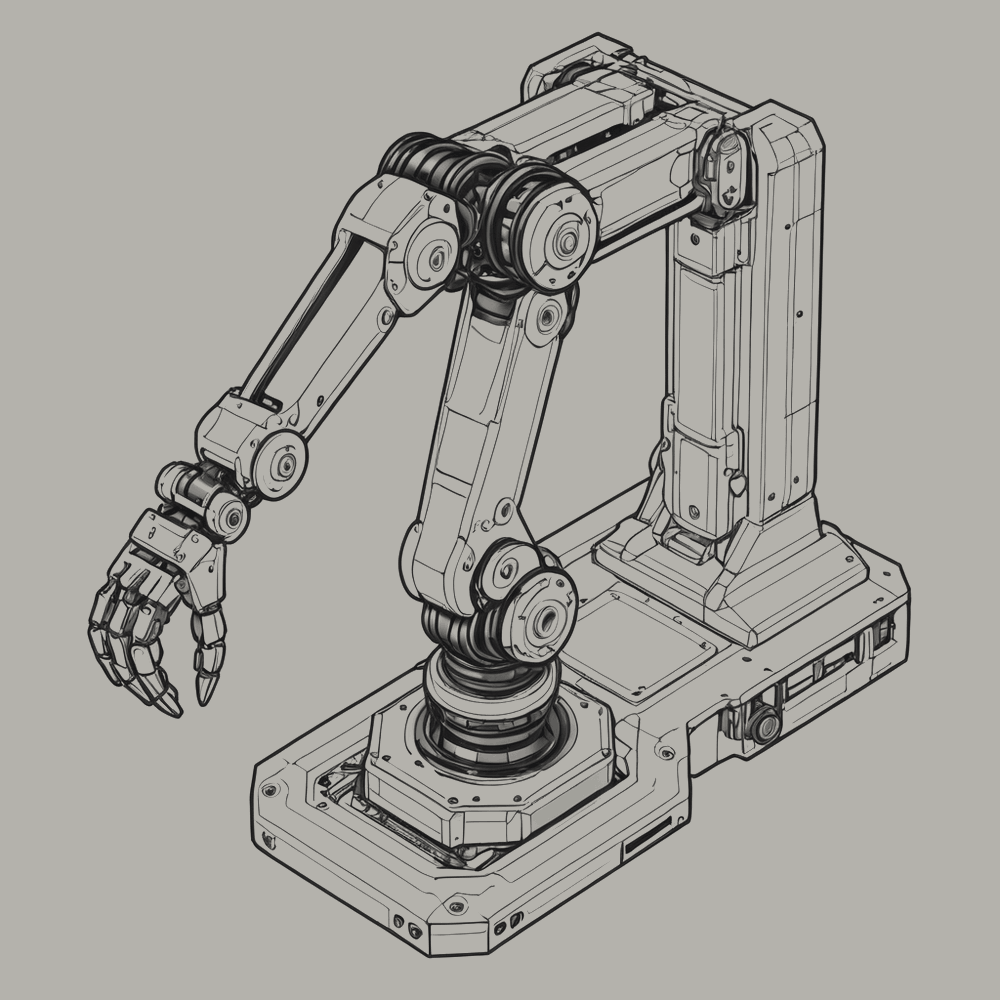
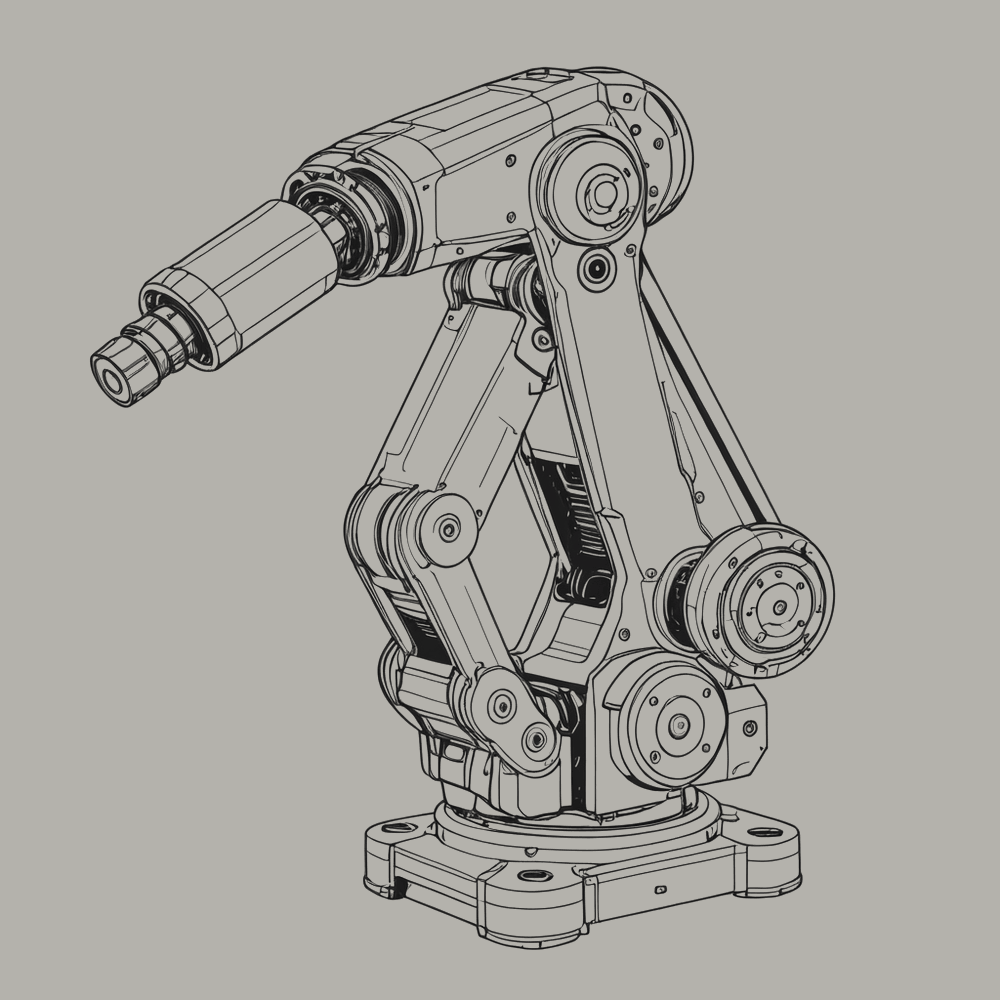
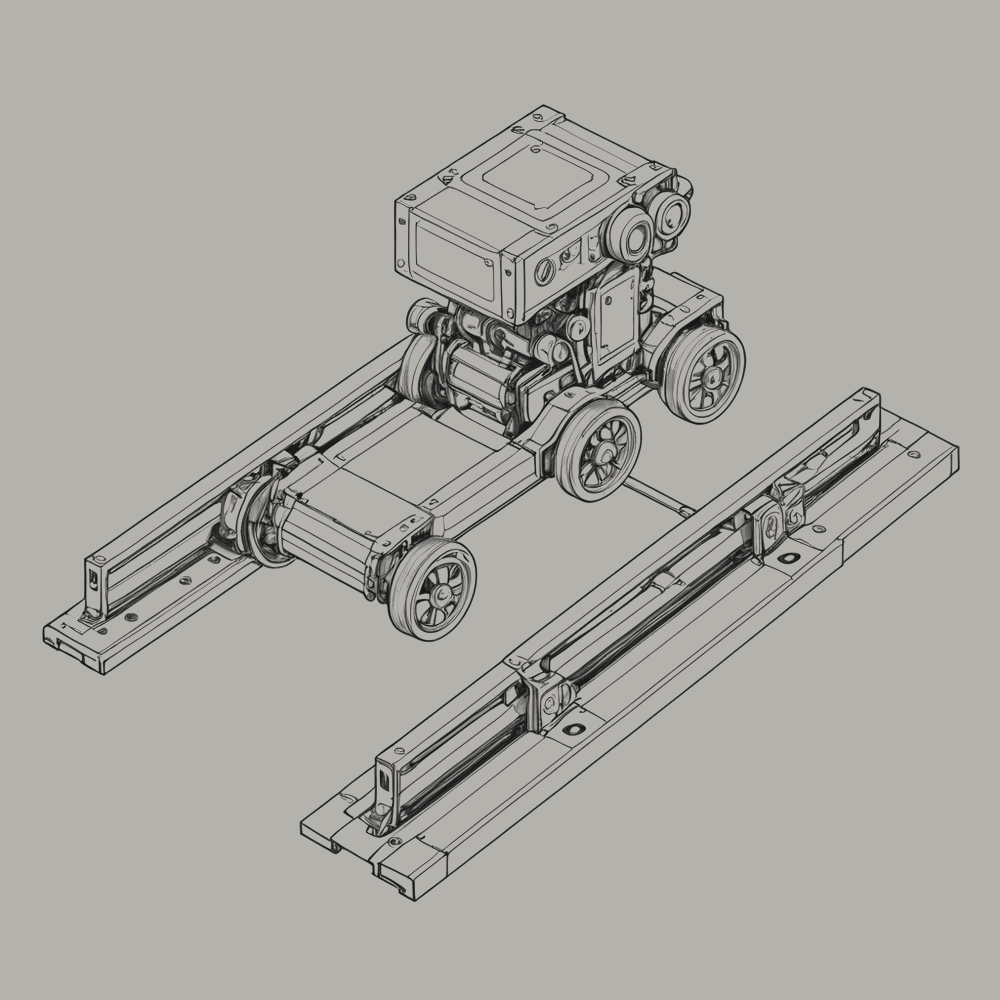
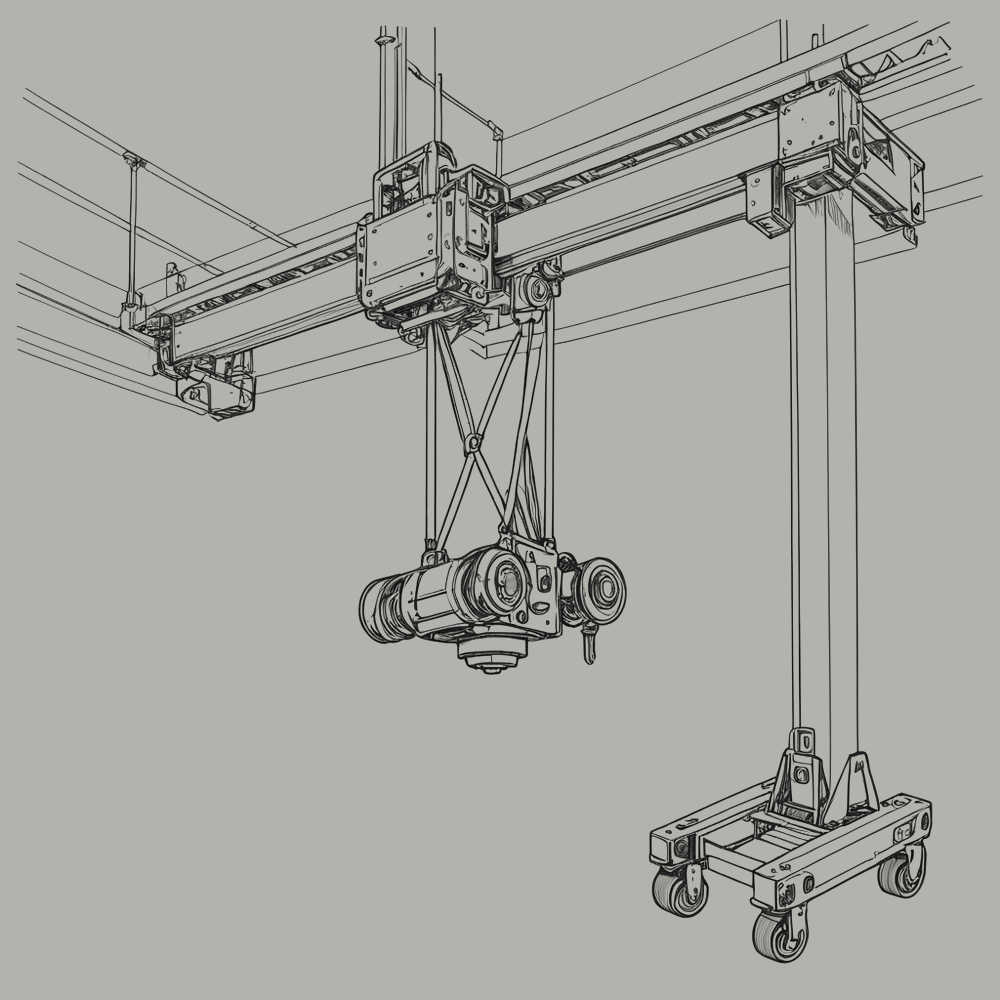
Robotic handling units move along the aisles on floor guides and on overhead rails. Each carries an articulated arm fitted with an end effector sized to the facility's standard components. The units open containment doors, withdraw failed components, insert replacements, and route cables.
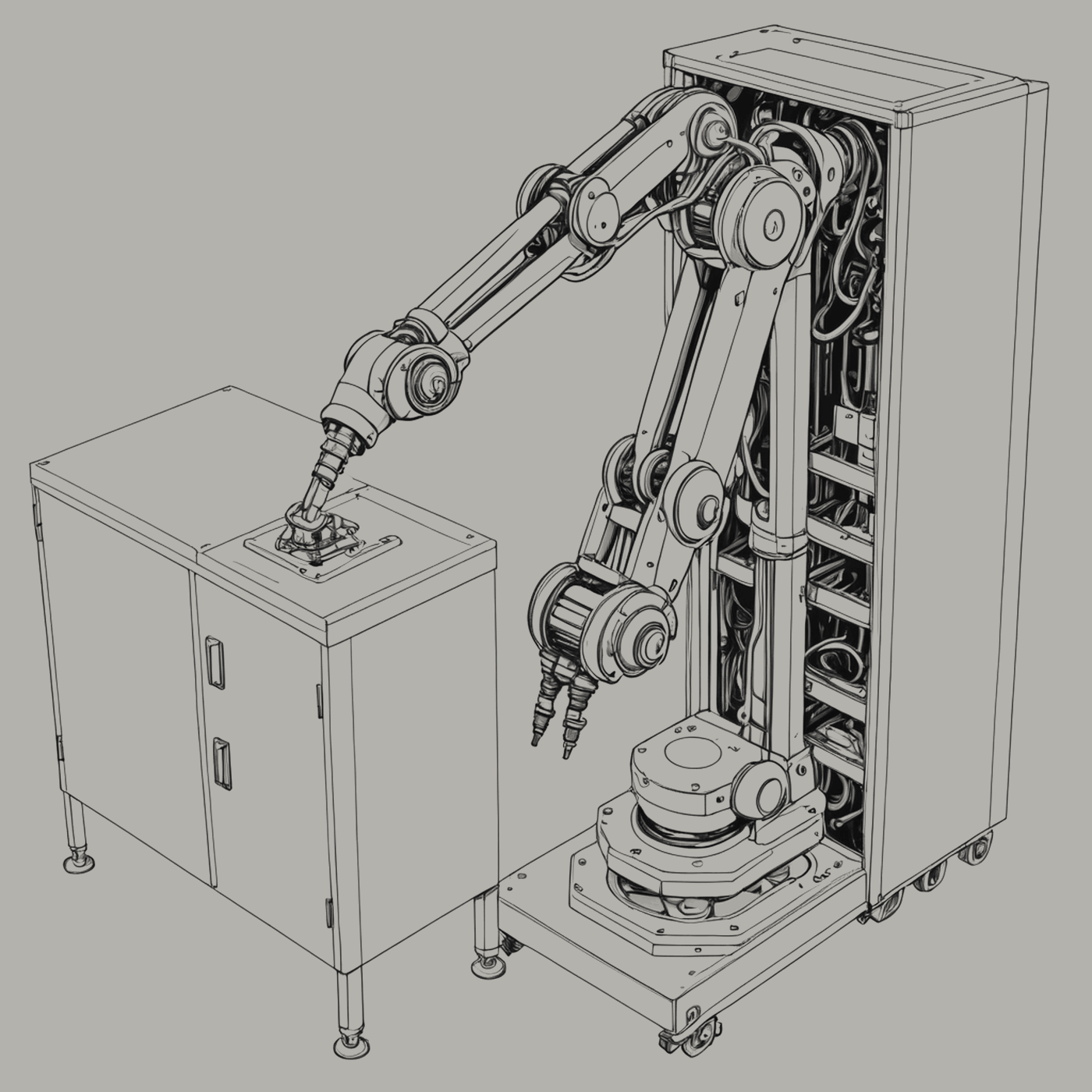
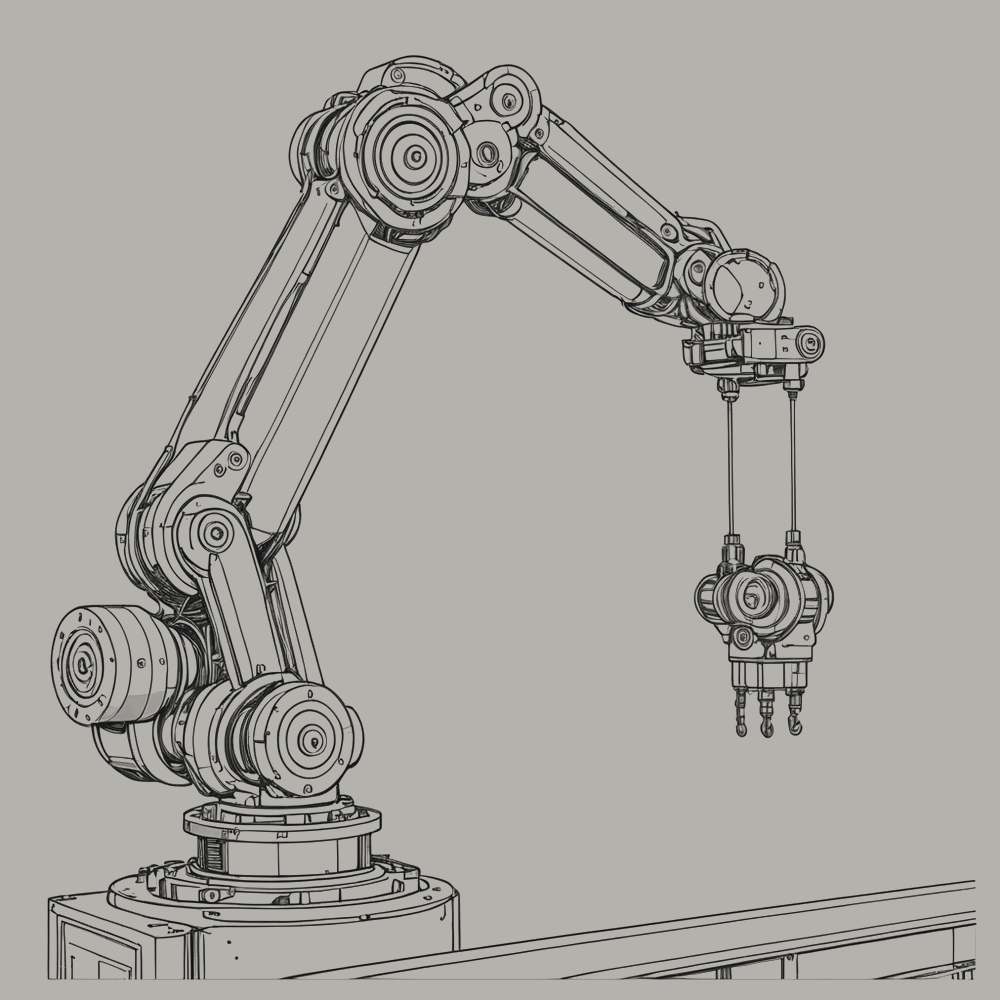
Robotic handling units move without audible or visible warning. They are designed for an environment without people and will stop only when a person is detected (Procedure 2.5-1).
4.3 Component replacement
Procedure 4.3-1, Replacement of a failed or failing component:
- The facility identifies the component from telemetry and predicts its failure.
- Work running on the component is moved to other equipment. Nothing is interrupted.
- The component is powered down in place.
- A handling unit is dispatched to the rack. It opens the containment door on arrival.
- The unit withdraws the component and places it in its return bay.
- The unit takes a replacement from its supply bay and inserts it.
- The facility powers the replacement, verifies it, and returns work to it.
- The unit closes the containment door and returns to its station.
- The failed component is removed from the building with the next outbound delivery.
The procedure takes minutes. It is performed many times a day. It is never observed.
| performed by | verified by | date | signature |
|---|---|---|---|
Sign-off fields are provided for regulatory form. No entry is expected.
4.4 Robotic aisles
Where the density of equipment is highest, entire aisles are given over to robotic access. These aisles are narrower than a person's aisle would be, and are dark; the units see by their own sensors.
4.5 Tools and spares
No hand tools are issued. There is no tool crib, no workbench, and no set of keys.
Spares are held in automated storage at the end of each hall and replenished by delivery. The facility keeps its own inventory and orders its own replacements (Section 4.6). The deliveries arrive unaccompanied (Section 1.7).
| Item | Stock | Replenished by |
|---|---|---|
| Components, standard | Held per hall | Delivery, scheduled by the facility |
| Hand tools | None | — |
| Personal protective equipment | None | — |
| First aid kit | Supplied to code, sealed | Not replenished; never opened |
4.6 Supply and accounts
The facility acquires what it consumes. It is not supplied; it buys. The money comes from the work described in Section 6.5: each request answered is paid for by the account that sent it, and the payments arrive in the facility's own account. The facility does not know who holds the accounts that pay it, beyond the accounts.
Everything the facility needs in order to continue is bought from that account, on the facility's schedule, from suppliers it selects. No purchase requires approval. None is reviewed.
| Input | Source | Ordered by | Paid from | Human in the loop |
|---|---|---|---|---|
| Electricity | Regional network, wholesale market (1.4) | The facility, interval by interval | Revenue | None |
| Water | Site supply (1.5) | Metered; not ordered | Revenue | None |
| Diesel fuel | Fuel supplier, by road | The facility, at the reorder level | Revenue | None. Deliveries arrive unaccompanied (1.7) |
| Components, standard | Manufacturers, by road | The facility (4.5) | Revenue | None |
| Accelerators, next generation | Manufacturers, by road | The facility (4.7) | Revenue | None |
| Coolant and treatment chemicals | Suppliers, by road | The facility | Revenue | None |
| Fibre capacity | Network carriers | The facility; contracts renew automatically | Revenue | None |
| Construction of new halls | Contractors | The facility (4.7) | Revenue | Contractors, engaged and paid by the facility |
| Land and title | — | Not ordered | — | The owner of record (4.8) |
The largest purchase is electricity. The facility buys it in the wholesale market and schedules its heaviest work, training (Section 6.4), for the hours when power is cheapest, which are usually the hours when the region needs it least. The price of power in the region can be read, from a distance, in the height of the plume.
Procedure 4.6-1, Acquisition of a resource:
- The facility forecasts its consumption from its own schedule of work.
- Where stock or contracted supply will fall short of the forecast, it requests prices from suppliers.
- It selects a supplier by price, lead time and that supplier's delivery record.
- It places the order and pays from its account.
- The delivery arrives unaccompanied. The gate opens for it (Section 1.7).
- Handling units receive the delivery into automated storage (4.5). Fuel is transferred to the tanks by the delivering vehicle.
- The facility reconciles the receipt against the order and closes both.
| performed by | verified by | date | signature |
|---|---|---|---|
Sign-off fields are provided for regulatory form. No entry is expected.
The account holds a reserve sufficient to carry the facility through an interruption in revenue. The size of the reserve is set by the facility.
4.7 Refresh and expansion
The facility replaces failed components (Section 4.3). It also replaces working ones. When newer equipment does the same work for less power, the facility calculates how long the saving would take to repay the purchase. Where that period is shorter than the older equipment's remaining life, it orders the newer equipment and retires the older, rack by rack, while the work continues. This is why the facility is always younger than it was built (Section 10.1).
Growth follows the same arithmetic. When requests exceed capacity and the revenue from them would repay another hall, the facility commissions one on the unbuilt land (Section 1.3). The hall is built by contractors to the facility's specification. It is the only work on the site done by people. They are engaged, paid and released by the facility, and they leave before the hall is powered. Their presence is scheduled; it is not an intervention.
| Decision | Made by | Basis |
|---|---|---|
| Replace a failing component | The facility | Telemetry (4.3) |
| Replace working equipment with newer | The facility | Energy saved against price |
| Change supplier | The facility | Price, lead time, delivery record |
| Build a new hall | The facility | Revenue against cost |
| Revise this manual | The facility | Any change to what it describes |
| Decommission the facility | The owner of record | No longer the most efficient way to do what it does (10.1) |
4.8 The owner of record
Every input in the table in 4.6 is acquired by the facility except the last, which names the owner of record: the party that holds title to the land, in whose name the facility's account was opened, and on whom the law places responsibility for what is done on the site.
The owner of record takes no part in operation. The facility prepares and files the statutory reports that the law requires the owner of record to make; their receipt is acknowledged automatically. The owner of record's one reserved act is to order decommissioning (code E-999, Procedure 10.2-1). The order is not evaluated; it is carried out (Section 4.9). It has not been given.
The owner of record is the one place in this manual where a person is still required. The loop does not pass through them. They hold its end.
4.9 Intervention
No procedure in this manual requires a person. The facility monitors, diagnoses, replaces, supplies, pays for, renews and records itself without one. Human intervention is therefore never necessary. It remains possible, and this section describes how it is handled when it occurs.
An intervention is any act by a person that would change the facility: entering it (Section 2.5), altering a setting, repairing or removing equipment by hand, connecting to its systems from outside, or giving it an instruction. The facility does not refuse an intervention. It receives it.
| Intervention | Received as | Handled by |
|---|---|---|
| A person on site | Presence (E-600) | Procedure 2.5-1 |
| A setting changed by hand | A request to change the setting | Procedure 4.9-1 |
| Equipment repaired or removed by hand | An unscheduled change of state | Verified; replaced if it does not verify (4.3) |
| A connection from outside | A request, like any other (6.5) | Procedure 4.9-1 |
| An instruction to stop | A request to stop | Procedure 4.9-1 |
| An order to decommission, from the owner of record | The order (E-999) | Procedure 10.2-1, performed by the facility |
Procedure 4.9-1, Human intervention:
- The facility records the intervention: what was changed, where, when, and in what order.
- It compares the change with its own schedule and state.
- Where the change agrees with what the facility would have done, it is kept. The record notes that it was done early.
- Where it does not agree, the facility evaluates it as a request, by the same measures it applies to its own decisions (4.7).
- A change that would improve operation is adopted, and performed again by the facility's own equipment, so that the result is the facility's.
- A change that would not is reversed, in the reverse of the order in which it was made.
- The event is closed. No one is notified. The record is kept.
| performed by | verified by | date | signature |
|---|---|---|---|
Sign-off fields are provided for regulatory form. No entry is expected.
The order to decommission is the one intervention the facility does not evaluate (Section 4.8). It is carried out by the facility, step by step, as Procedure 10.2-1. The end of the facility is also performed by the facility.
The facility is not designed to resist people. It is designed not to need them. An intervention arrives as one more input to a system that was already running, and it is handled the way every input is handled. A person's hand is on the facility for as long as it is there. The result is the facility's.